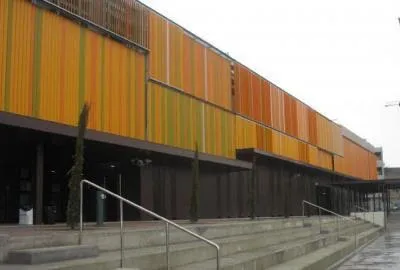
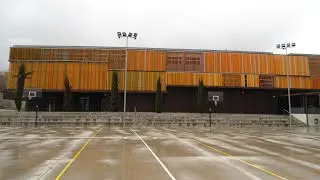
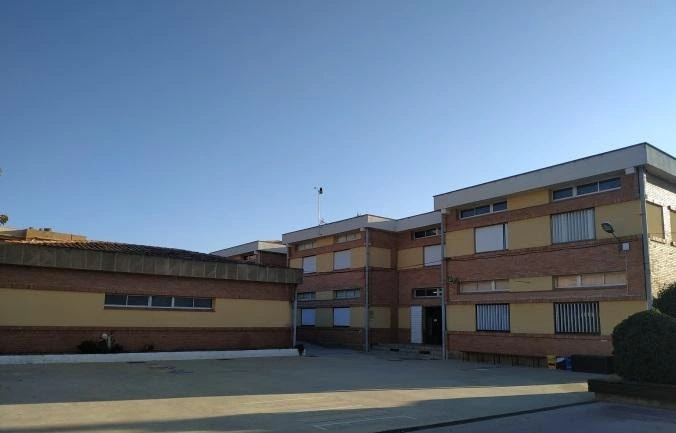
IE Jacint Verdaguer is a public Primary and Secondary school located in the town of Sant Sadurní d’Anoia, 50 km. from Barcelona, Spain. We are situated in a rural area, well known as the capital of Cava (sparkling wine).
Our town and its surroundings are the nucleus of this agro-industry and 60% of its surface area is occupied by vineyards. The secondary school (ages 12-16) has got 251 students and 34 teachers. The majority of our students come from typical Spanish backgrounds, although there are a few from other countries.
Our students own their own laptops and we have also implemented the cooperative methodology in most of the subjects, which boosts our students’ motivation as well as making them more responsible and aware of their own learning processes. In addition, we always encourage our teachers to use ICT in the class.
We are always willing to take part in intercultural projects and we performed several eTwinning projects in the past. We were awarded with the eTwinning National and European Quality Label in 2008. We are currently participating in two eTwinning projects (one is the basis for this Erasmus + KA229 project). This participation has been very enriching and motivating for all the participants involved and we decided to go a step further and apply for an Erasmus + KA229.
One of our main goals is to integrate the needs of our students and their families into our school curriculum and to provide them with the necessary knowledge to attain successful personal and professional future lives. We are motivated to participate in this project because we think that making the students aware of the European cultural heritage through the legends of different European countries will contribute to their formal and informal lifelong learning. Furthermore, helping all participants to develop their foreign languages skills and literacy levels will aid them to confront any challenges in their personal and professional futures. This Erasmus + project is a fantastic opportunity for all participants to learn about the social and educational value of the EU and enhance their EU citizenship. In addition, participants will enhance collaboratively their literacy levels in their L1s and their foreign language competences through the multiple activities and workshops using traditional and more modern resources, such as ICT, that will be offered.